
Healthy Europe asked four decision-makers about the current and future relevance of the WHO Ottawa Charter for Health Promotion for their work. Natasha Azzopardi Muscat, Director of Health Systems at WHO/Europe; Korinna Schumann, Austrian Minister of Health; Clemens Martin Auer, President of the European Health Forum Gastein (EHFG); and Klaus Ropin, Head of Fonds Gesundes Österreich (Austrian Health Promotion Fund), responded as follows.

Natasha Azzopardi Muscat, Director of the Division of Health Systems, WHO Regional Office for Europe
The world has changed dramatically since 1986. We face ageing populations, changing health needs, the impacts of climate change on health and our societies as a whole, widening social and economic inequalities, and also the rapid rise of AI in the midst of persistent pressures on health systems – all of these in an increasingly complex and polarised geopolitical context. Yet these challenges do not diminish the relevance of the Ottawa Charter; they reinforce it. Its central message remains as relevant as ever: health is created not only in hospitals and healthcare facilities, but also, and increasingly so, where people live, learn, work and age. At WHO/Europe, this principle continues to shape our work every day, and it is at the heart of our vision and strategy as captured in our second European Programme of Work.
The Ottawa Charter is at the heart of the vision and strategy of WHO/Europe.
So, what comes next? The future of the Ottawa Charter lies in applying its principles to the realities of today, while being ready to shift our efforts depending on how our societies and health systems evolve over time. Empowering people now means ensuring that their health and wellbeing are always our main objective and driving force. It means building healthy public policies that take into consideration the health impacts of decisions on issues such as housing, transport, urban development, education, employment and emerging technologies. Strengthening community action means working with people to co-design solutions that reflect their needs and realities. As we mark the 40th anniversary of the Ottawa Charter, it should not be viewed simply as a historic milestone, but as a living framework for the future. Our goal is ultimately still the same: to create the conditions that enable people to live healthier lives – no matter where they are.
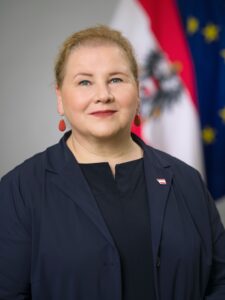
Korinna Schumann, Austrian Minister of Labour, Social Affairs, Health, Care and Consumer Protection
In the Ottawa Charter, health is seen as a responsibility for society as a whole, and its central messages are just as relevant today as they were 40 years ago. These messages are: to create supportive environments and to enable people to take control of their own health. In addition, facilitating participation and strengthening health literacy remain central strategies. However, in view of demographic change, the climate crisis, digitalisation and growing social inequity, the Ottawa Charter must also undergo continual development to keep pace with the modern world. We don’t need to make a fresh start, though. Instead, the Charter must be consistently adapted to new health challenges.
In the Ottawa Charter, health is seen as a responsibility for society as a whole.
In everyday life in Austria, the principles of the Ottawa Charter feature in initiatives such as the Agenda Gesundheitsförderung (Health Promotion Agenda), the activities of Fonds Gesundes Österreich (Austrian Health Promotion Fund), the Gesunde Gemeinden (Healthy Communities) and also health promotion measures in schools and businesses. Its fundamental ideas were also integrated into the ten Austrian health goals. At the same time, considerable challenges remain: a person’s socioeconomic background continues to have a determining influence on their health, chronic illnesses are on the rise, and both health promotion and prevention are awarded insufficient attention and financial resources compared to curative care. For the future, it will be crucial to pursue health in all policies with even greater tenacity, and also to continue the expansion of health promotion, health literacy and prevention, while securing enough financial means for these areas over the long term.
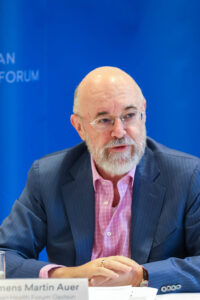
Clemens Martin Auer, President of the European Health Forum Gastein
In 1986, the Ottawa Charter for Health Promotion was a game changer for how health promotion is viewed in health policy. And indeed, there are several areas where progress has been made in health policy in the narrower sense – you only need to think of the many screening programmes and early detection tests, the ban on certain chemicals, digital information services, and measures in day-to-day working life. However, the all-important promise has not been delivered: while Europeans have a higher life expectancy, they are not becoming healthier. On the contrary, many of the noncommunicable diseases (NCDs) are increasing at an alarming pace and have developed into leading causes of death.
The promise has not been delivered: Europeans are not becoming healthier.
Besides the genetic prerequisites in each of us, this is primarily because in all these years it has not been possible to anchor health and health promotion in all areas of policy, and very specifically in the regulations for economic policy. There has been hardly any progress in the fight against the commercial determinants of ill health. When it comes to healthy and balanced diets, for example, which play a huge role in preventing diseases, we have not moved forward. While food labels have been introduced (that are difficult to read or understand), we are still waiting for EU market regulation that prevents unhealthy or harmful foods being displayed and sold in supermarkets. Initial successful policies to fight against the omnipotence of the food and beverage industry, such as the sugar tax modelled on the UK, are emerging only tentatively. There is still a great deal to be done in effectively implementing the Ottawa Charter.
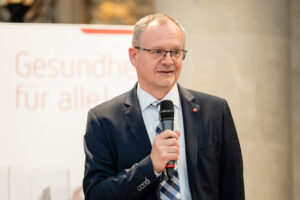
Klaus Ropin, Head of Fonds Gesundes Österreich (Austrian Health Promotion Fund), a division of Gesundheit Österreich GmbH
The Ottawa Charter augmented our understanding of what health is and how it can be promoted, and it has had a lasting effect. The Charter underlines that health is anchored and originates not just in the health sector, but primarily in our environments where people live, learn, work and love. This paradigm shift introduced by the Ottawa Charter 40 years ago prepared the way for the health promotion act in Austria, which was ultimately passed in 1998. Without this legislation, it is unlikely that the Austrian Health Promotion Fund Fonds Gesundes Österreich (FGÖ) would exist in its current form. Since our very beginnings, the principles of the Ottawa Charter have governed our work and formed the basis of numerous activities. These especially include a wide range of practice-oriented projects across Austria which focus on settings-based health promotion and have ongoing support from the FGÖ.
Today, 40 years after it was passed, the Ottawa Charter is more relevant than ever before.
Today, 40 years after it was passed, the Ottawa Charter is more relevant than ever before. And even though the challenges have shifted, its basic principles still point the way ahead. We live in a time marked by climate change, digitalisation, military disputes and demographic change. This makes it all the more important to gain an understanding of health that goes beyond health systems and integrates all areas of policy and life. Health in and for all policies – this is exactly what the Ottawa Charter stands for. Its principles, such as equal opportunities, participation, empowerment and supportive environments, will provide orientation as a framework for effective health promotion in the future as well. And so, for the FGÖ, it remains far more than just a historical document: the Ottawa Charter is a compass that helps us further develop health promotion and improve the health of people living in Austria over the long term.