
Global health expert Ilona Kickbusch, leading initiator of the 1986 Ottawa Charter, talks to Healthy Europe about the 40th anniversary of this fundamental document and future topics in the field of comprehensive health promotion.
Interview: Dietmar Schobel
HEALTHY EUROPE: Prof. Kickbusch, it is now 40 years ago that the fundamental document for comprehensive health promotion presented by the World Health Organization (WHO) was approved at a conference in Canada’s capital city, Ottawa. As one of the main players involved in the preparation of the Ottawa Charter, what takeaways do you associate with it?
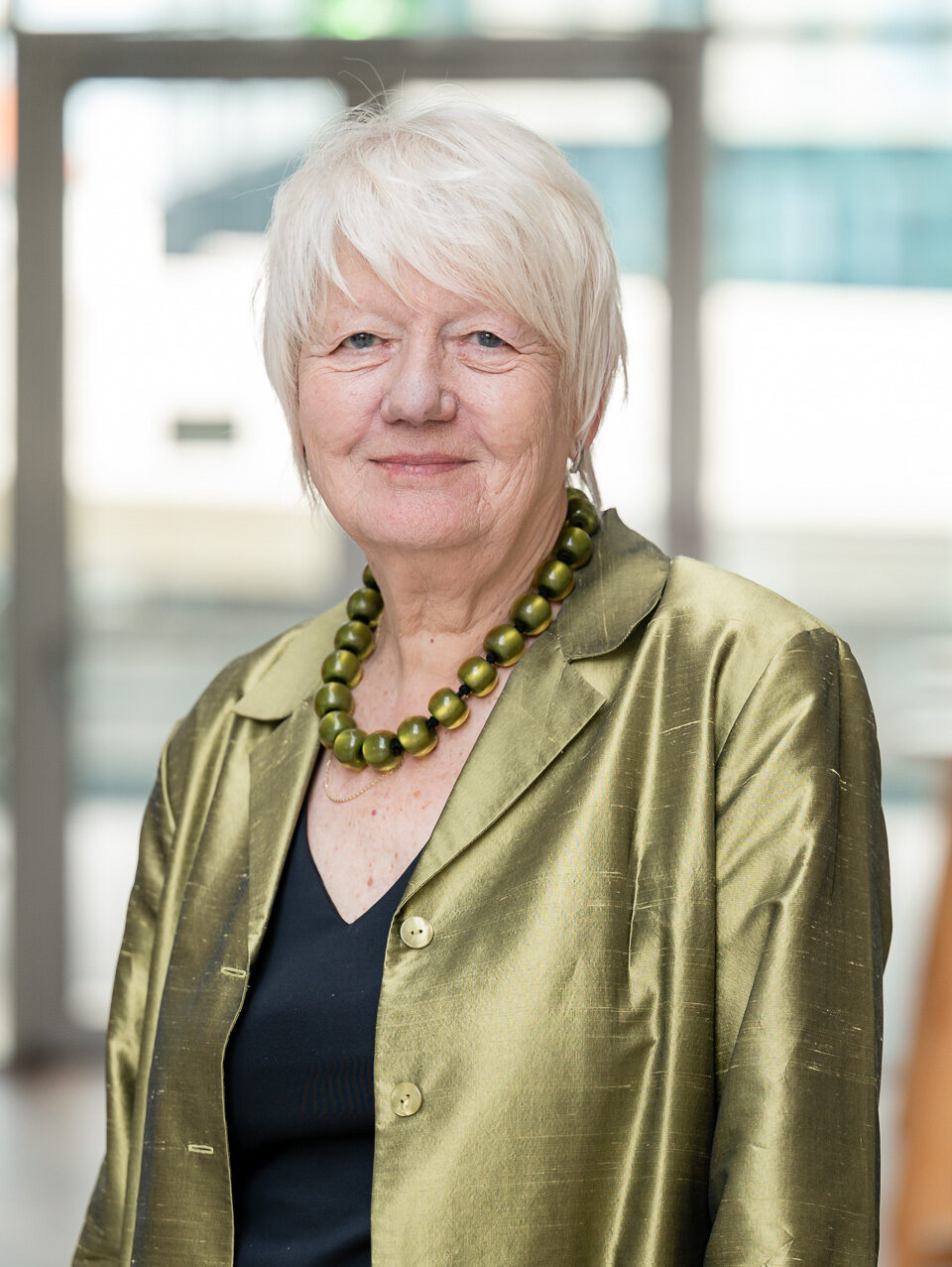
Credit: Klaus Ranger
Ilona Kickbusch: The conference was a turning point in how we understand health policy. For the first time, the spotlight was on what society as a whole can do to preserve and promote the health of its citizens. According to the Ottawa Charter, it is crucial that settings such as schools, workplaces and local communities are designed overall to support health to the fullest extent. Within this process, the general public needs to be actively involved as best possible. Additionally, people should be equipped with the knowledge that is necessary for taking care of their own health. The Ottawa Charter continues to provide an alternative to the perspective of a health system that is exclusively about how diseases affecting individual people can be treated with drugs and therapies. Besides this, we need to draw a line between health promotion and prevention. While the latter aims to avoid illness, health promotion is designed to have a positive influence specifically on those factors that improve our health.
HEALTHY EUROPE: How would you describe health promotion as outlined in the Ottawa Charter?
Ilona Kickbusch: A healthy school, for example, goes much further than just holding a talk every few months about the benefits of not smoking. Instead, the aim there is to integrate healthier action into the process of teaching and learning overall:
* such as involving schoolchildren in how spaces are designed,
* when healthier products are sold in the school canteen,
* or when there are opportunities for exercise during breaktimes.
These measures that support health are aimed not just at children and adolescents, but also at teachers, other school staff, and parents.
HEALTHY EUROPE: Can you give another example of comprehensive health promotion?
Ilona Kickbusch: The WHO Healthy Cities Network is a successful achievement that has integrated thousands of municipalities all over the world. Specific measures range from centralised purchasing of regional and organic products, include widespread public participation, and continue through to improved opportunities for healthy, active mobility, such as cycling or walking. If you increase the number of safe bicycle and pedestrian paths, you will encourage people to travel more often by bike or go places on foot. In general, “make the healthy choice the easy choice” is a fundamental objective of health promotion.
The concept is now widely accepted. But things are different in practice.
ILONA KICKBUSCH, GLOBAL HEALTH EXPERT
HEALTHY EUROPE: What countries are pioneering here, globally speaking?
Ilona Kickbusch: Back in 1986, Canada was chosen to host the conference because it was the only nation to have already implemented comprehensive health promotion at the time. Today, health promotion concepts continue to be adopted by many countries. Scandinavian countries, where welfare state structures are already especially well developed, have been almost continuously among the pioneers. For instance, Finland focussed on “Health in All Policies” during its presidency of the EU Council in 2006. The concept behind this is to incorporate health aspects in all policy decisions – ranging from the economy and education system through to social issues. Austria’s Health Promotion Act in 1998 and Germany’s Prevention Act in 2015 have also acted as role models.
HEALTHY EUROPE: How has health promotion developed over the past 40 years?
Ilona Kickbusch: “Health is created and lived by people within the settings of their everyday life; where they learn, work, play and love.” This central sentence from the Ottawa Charter describes that our wellbeing is dependent above all on the conditions in which we live – and that is why it is more important to improve this environment than only taking care of our health when diseases need to be treated. Today, this approach has been adopted in almost all health policy documents. But things are different in practice. There are indeed individual countries where this is being implemented – depending on the current balance of political power, and there are environments such as places of education or work and also local communities where a lot has been achieved, as already mentioned. However, we could go much further. At the same time, I would like to emphasise that it always takes several decades until innovative policy concepts become established. Implementing the Ottawa Charter is a dynamic policy process.
HEALTHY EUROPE: How can we recognise this “political momentum”?
Ilona Kickbusch: One example is New Zealand, which introduced the world’s first “wellbeing budget” in 2019 under the country’s Prime Minister Jacinda Ardern and Minister of Finance Grant Robertson at the time. The success of government action was no longer measured against economic growth and specifically the rise in GDP, but against the quality of life and the wellbeing of a country’s population. Expenditure was specifically redeployed to address societal challenges such as child poverty, domestic violence and psychological problems. Since the new government came to power in New Zealand in late 2023, other goals have taken precedence again. A positive example can be currently found in Germany, where the present coalition government is planning to pass not just a levy on sugary drinks, but also higher taxes on tobacco and alcohol. One reason for these public health measures is the increasing awareness that patient care in its predominant form up to now will no longer be affordable in the future.
HEALTHY EUROPE: What potential improvements would you suggest in the way that the Ottawa Charter has been implemented?
Ilona Kickbusch: Health promotion has become more professional, which on the one hand is positive. But on the other hand, it has become disconnected from policymaking. If we returned to seeking greater focus on health within civic engagement for the environment, social affairs or women’s rights, this would step up pressure on politicians to take concrete steps to increase health promotion, also in the sense of “Health in all Policies”.
HEALTHY EUROPE: Does health promotion – as set out in the Ottawa Charter – need a reboot in 2026?
Ilona Kickbusch: After 40 years, there is always a need at least for some extra vitamins. Right now, there are several issues that have relevance for the future and would provide the necessary input. The Wellbeing Economies already mentioned are one of these: they are economies that are oriented on improving public health. Six countries have pledged their commitment as part in the “Wellbeing Economy Alliance”. “One Health” and “Planetary Health” are concepts that unite the topics of health promotion and climate protection – a huge and critical area for the future. For example, an important aspect here is that a balanced diet with a high proportion of products of plant origin, such as fruit, vegetables and specifically legumes, can also contribute to fighting climate change. This is because cultivating plant foods generates considerably less greenhouse gases than meat production.
HEALTHY EUROPE: Since the Ottawa Charter was passed, you could say that a new environment has emerged in the form of a digital landscape. Can this be shaped to promote health or at least support health to a greater degree?
Ilona Kickbusch: I’m very sceptical about whether that is possible. Digital technologies are a topic that has long impacted every area of our lives. And today, we know that using digital tools and specifically an extreme use of social media can harm our health. To maximise profits, the tech sector has adopted similar strategies to the tobacco industry with their “tobacco playbook” from years ago – such as disinformation, lobbying and making consumers addicted to their products. In the interests of public health, we have to confront this and advocate for the appropriate regulations. Age limits that are consistently monitored and observed are an important step here, as are making schools mobile phone-free zones. Regulations such as the European Union’s Digital Services Act are also positive. These need to create increased transparency, protect user rights and also provide opportunities for holding large digital platforms to account.
FROM OTTAWA OUT INTO THE WORLD
The Ottawa Charter is the basis of health promotion in our modern world and an approach to achieving a “new public health”. In November 1986, over 300 participants came together in Canada’s capital city for the first health promotion conference of the World Health Organization (WHO), including around 50 health ministers and other high-ranking representatives of governments around the world, as well as representatives from science and civic organisations. They exchanged views, had intense discussions, and worked together to develop a plain-speaking guiding principle that outlines how the WHO goal of “more health for all” can be implemented in practice.
These are the five action areas as described in the Ottawa Charter:
1 All policies should promote health, i.e. target better health for all citizens.
2 Environments such as cities, local communities, our housing and living space, our everyday working lives, and also our educational institutions and the conditions for teaching and learning there should promote health.
3 Participation and collaborative action by citizens and neighbourhoods should be supported.
4 Personal skills should be supported, such as being able to find, understand, assess and apply information on health.
5 Health facilities – from pharmacies to major hospitals – require reorientation: less medicine for repairing and more health promotion.
The full Ottawa Charter is available on the website of the trade journal “Health Promotion International”, for example: https://academic.oup.com/heapro/article/1/4/405/933881