
“Healthy Streets” is a framework that is designed to turn roads into more liveable areas for people, rather than just transport routes for cars and lorries. In Austria, the concept is being applied in places such as Gleinstätten in the province of Styria.
Text: Dietmar Schobel
Does the street where you live or work have
* Enough space for pedestrians to walk next to each other?
* Are there places to sit and is there any shade?
* And can the street be used safely by cyclists?
Factors such as these can assess the health quality of roads based on the “Healthy Streets” approach, which was developed by British city planner and public health expert Lucy Saunders. Based on ten indicators (see also box: Ten Factors for a Healthy Street), surveys ask precise questions relating to each area. 100 points are the highest value that can be theoretically awarded to a Healthy Street. The website www.healthystreets.com provides detailed information on the free and fee-based assessment tools available for citizens and also for technical planners and decision-makers.
Eleven projects in Austria
In London, this approach is part of the master plan that envisages four fifths of activities being reached on public transport, by bike or on foot by 2041. Past and present developments are also found in Australia, Germany, Ireland, Spain and Hungary. And following a call by Austrian health promotion fund Fonds Gesundes Österreich, projects in eleven communities throughout Austria have also been selected for implementation.
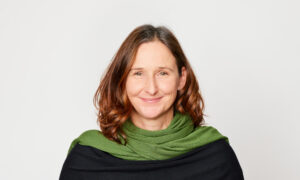
These include the project titled “Raus auf die Straßen” (Out onto the streets), which kicked off in May 2025 and will continue until October 2027. Working together with model region Sulmtal-Sausal, the project is organised by health promotion organisation “Styria vitalis” in and with the market town of Gleinstätten, which has around 3,000 inhabitants. “It is especially important for the success of this project that Elke Halbwirth, mayor of Gleinstätten, is fully backing these measures,” emphasises Gerlinde Malli, Healthy Communities Director (Gesunde Gemeinde) at Styria vitalis.
Streets need to become inviting and attractive
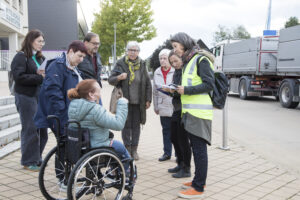
Representatives of the district initially chose a section of the busy main road running through Gleinstätten for a healthier design: specifically, the approx. 500 metres between the secondary school and a local bank. An inspection of the area – with 16 enthusiastic residents who signed up for the project – explored how they would feel safer, more relaxed and at ease on and beside this stretch of road. The Feelings Survey developed by Healthy Streets was used for the inspection.
The results of the survey showed a huge need for improvement. Some of the measures that will now be implemented include planting trees, installing bollards to mark pedestrian areas, and also adding traffic islands. A few hundred metres from the school, a drop-off area will be added where parents who take their children to school will be able to halt to let their young ones out of the car. The children will then walk a short distance, which reduces the amount of motorised traffic directly outside the school. “Our overall aim for this participative project is to transform this section of the road in Gleinstätten into a place that is more inviting and where people feel more at ease than they used to,” summarises Gerlinde Malli.
TEN FACTORS FOR A HEALTHY STREET
The Healthy Streets approach describes ten areas that are significant for assessing roads according to health criteria:
1 All age groups with or without physical or mental disability should feel welcome.
2 People decide to walk or cycle when it is the safest, most direct and most inviting alternative. This means that such options need to be the most attractive ones.
3 Everyone must find streets easy to cross.
4 A feeling of safety is a basic requirement for use of streets. People need to feel protected against accidents, violence and crime.
5 There should be things to see and do: This increases willingness to walk or cycle.
6 Streets need places to stop and rest: This is especially important for sick, elderly, very young or disabled people.
7 Time to relax: Streets and pavements need to be sufficiently wide and maintained and have greenery.
8 The level of noise must not drown out a normal conversation. Volume and speed of motorised traffic needs to be reduced.
9 Everyone wants clean air: Every single measure to reduce traffic that uses fossil fuels also improves air quality.
10 Trees and overhangs can provide shade and shelter.
Source: shortened from www.healthystreets.com